
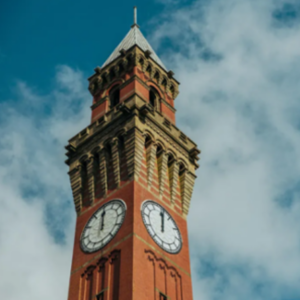
Based upon an academic partnership between the Universities of Birmingham in the UK and Leiden in the Netherlands, Universities and Society at the End of Empire and Beyond (UniSoc) uses these two global seats of learning as a starting point to examine the role of universities in the transition from colonial to postcolonial and multicultural societies over the past century. Both institutions have started to reflect critically on this legacy. Building on these initiatives, and on the emerging scholarship on universities in (post) colonial contexts, UniSoc asks how the remit and modus operandi of European universities evolved in the aftermath of empire, opening a neglected entry-point into the wider question of the interplay between the colonial past and the post-colonial present.
The field of decolonisation studies has been remarkably dynamic in the twenty-first century, structured in particular by the ‘Decolonization Seminar’ held at the Library of Congress in Washington over ten years (2005-2015), and enriched by the multiple opportunities for cross-fertilization between empirical history and the theoretical perspectives underpinning postcolonial studies. Yet, one aspect which deserves further elaboration relates to the very places where these conversations have taken place: the universities, notably in the Western world. UniSoc seeks to uncover how institutions of higher education navigated the decolonisation process, both in the former metropoles and the former colonies.
Scholarship has shown how, in the late colonial period, universities both trained students that would become colonial civil servants, as well as more and more students from the colonies – with the inequalities undergirding colonialism as a result increasingly discussed and challenged.
Understanding decolonization as a process, Unisoc aims to take the work on the role of universities in the period after formal decolonization further and examine how universities also played a role in the transition towards the post-colonial order, sending their researchers to newly-independent states, embracing the development paradigm and sometimes accompanying the development of burgeoning academic life in countries that were still in the making. Whilst it was crucial at the time, this role in helping set up an academic framework – sometimes from scratch – can also be seen as a form of acculturation.
Back in the metropoles, universities were at the heart of intellectual efforts to conceptualize the new world that was emerging out of decolonisation, from global power relations to migratory patterns, and what this meant for local societies. At the same time, the student body also changed significantly, further questioning the unspoken assumptions of these institutions. Universities continue to play a key role in conversations about the future of nations that have to re-invent their place in the world, whilst facing significant change in sociological and ethnic dynamics as a direct legacy of their imperial trajectories.
The first event of this new research programme will take the shape of a workshop in Birmingham on 23 and 24 June 2026, for which paper proposals are invited. Potential contributions could include, but are not limited to, the following areas:
- Universities and the training of new colonial elites
- The production of knowledge in the decolonisation period
- The role of higher education in thinking post-colonial societies
- Universities and public discourses on race and migration
- Evolutions in curricula
- The trajectories of universities in (former) European colonies
- Technical training and the transition from colonial to postcolonial
- Student experiences
- Universities and their societal context: cities, regions, networks
- Universities, decolonisation and humanitarian action
- Practice transmission (e.g. in Law Departments)
- University collections and decolonisation
- Decolonial approaches to learning and science
- Ethical considerations around knowledge and universality
The workshop is committed to bringing together perspectives from the Global North and South. The initiative will also lead to a special issue in a leading journal – provisional title: Shaping the Post-Empire? Universities and Decolonisation.
Please send your 300 word paper proposals, accompanied by a short 1 page CV, to the organisers Berny Sèbe in Birmingham ([email protected]) and Anne-Isabelle Richard in Leiden ([email protected]) before 27 March 2026. A small number of bursaries contributing towards accommodation and travel expenses will be made available to contributors unable to secure institutional funding. Please state this in your proposal if you wish to apply for one of these bursaries.