As collections of dried plant specimens, herbaria are essential resources for studying biodiversity today—and they have been since the early modern period embraced this particular way of studying nature. Yet herbaria are more than repositories of botanical data and resources for (ethno)botanists. In the last five decades, historians have shown how these documents also tell powerful stories about the entangled histories of science, empire and colonialism.
In this one-day interdisciplinary workshop we explore herbaria as historical sources. Our questions range from the practical to the conceptual: What can these specimens tell us about history? What kind of information do they contain? What methods and tools do historians need to unlock that information? How can we ‘read’ plants against written evidence? Our focus will be, by and large, on herbaria as sites of knowledge production as well as knowledge suppression: sometimes herbaria can offer insights into local or indigenous knowledge that was appropriated by Western scientists and is now lost from view. How can we retrieve such information? What does it mean that herbaria sometimes obscure as much as they illuminate? As such, the course aligns with the goals and ambitions of the ‘Archives of Power/The Power of Archives’ research network: to reflect on our relationship with archives/archival research and to strengthen the conceptual and theoretical frameworks that historians use to tackle order, disorder, gaps, silences, violence, and overload in their archival research.
The workshop combines the hands-on making of herbaria with critical reflection on their format and use in history. In the morning, we will go to the Utrecht University Botanic Gardens to collect plants from the garden, press them, and thus create a herbarium sheet. In the afternoon, we plan to go to Naturalis Biodiversity Center in Leiden, which has one of the world’s largest collections of herbaria, but one that is not often frequented by cultural historians. Participants will thus gain valuable insights into how herbaria are made and used, and the kind of knowledge needed to turn plants into resources for historians and (ethno)botanists. By reading a selection of recent literature on herbaria and their (colonial) history, participants will also be able to situate those insights into recent debates about archives, colonial history, decolonization, and the history of science. Particular attention will be paid in the discussion and sessions to how herbaria can be a valuable entrypoint into retrieving local or Indigenous knowledge.
After this workshop, participants will be able to see herbaria as scientific as well as cultural and historical archives, and gain a sense of what it means to work collaboratively and in an interdisciplinary team of historians and (ethno)botanists.
Instructors:
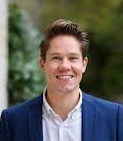
Richard Calis is Assistant Professor in Cultural and Intellectual History at Utrecht University. Most of his research revolves around questions of cultural exchange, and the ways in which people across the early modern world made sense of their surroundings. He is one of the PI’s in a EU-funded project on colonial university heritage, which, amongst others, stimulates thinking on decolonizing botanical gardens. He is one of the founding members of the Huizinga research network on archives and power.
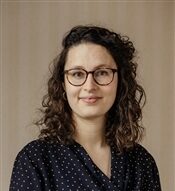
Rosa de Jong is a postdoctoral researcher in the History Department at Utrecht University. She is currently researching the colonial roots of the Utrecht Botanical Garden, especially in the Caribbean, as well as their lasting impact. Previously, she researched Second World War flight migration to the Caribbean. De Jong is also one of the founding members of the Huizinga research network on archives and power.
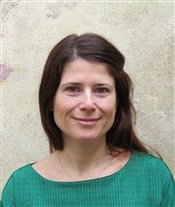
Anastasia Stefanaki is an assistant professor and works as a curator at the Utrecht University Botanic Gardens and a guest researcher at Naturalis. Trained as a botanist, she specializes in botanical history and historic plant collections, with a focus on the 16th century. In her work, she frequently collaborates with (art) historians, paper specialists, genomicists, and paleographers to explore multidisciplinary approaches in the study of botanical history and historic plant collections.
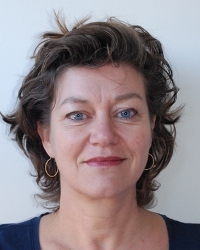
Tine van Andel is an ethnobotanist and Professor Ethnobotany (Wageningen University) and Professor History of Botany and Gardens (Leiden University). She studies historical herbaria, traditional rice varieties in the Guianas, plant use by hunter-gatherers in Cameroon, plant and people migrations, and medicinal and ritual plant use.
Programme
- 09:00 Introduction by Richard Calis and Rosa de Jong
- 09:30 Hands-on session ‘how to make a herbarium sheet?’ by Anastasia Stefanaki
- 12:30 Lunch + travel to Leiden
- 14:00 Hands-on session ‘herbaria through the ages’ by Anastasia Stefanaki and Prof. Tinde van Andel (Naturalis)
- 16:00 Wrap-up
- 17:00 Drinks
Assignments
- preparatory reading and a think piece (max. 500 words)
- active participation in the hands-on sessions
- final assignment in the form of a reflection on the workshop (max. 1000 words)
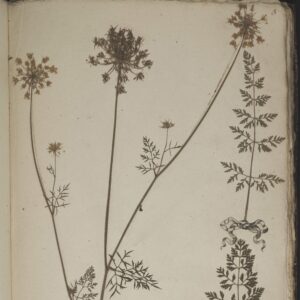
Source illustration: Naturalis Biodiversity Center
Register (0/14 spaces left)
This course is fully booked. For a spot on the waiting list, contact [email protected]